

Equiano, The African is one of the best nonfiction books I have ever read. Hands down. To even tell you everything that I learned would take much more space and time than we have time to talk about here, but let’s go over the highlights, shall we?
First, let’s talk about the author a bit. Vincent Carretta is a professor of English at the University of Maryland, and he specializes in 18th century history and literature. He’s published books about other important voices of black history, such as Phillis Wheatley, the first African American poet, and Philip Quaque, the first African Missionary.
In this book, Carretta takes us on a voyage through Equiano’s life by going through Equiano’s autobiography, and gives us the context surrounding specific moments of his life, some of which are incredibly original.
“Equiano’s autobiography is the most extended and detailed account of naval experience left by any eighteenth-century writer of African descent”
The book is divided into fourteen chapters, each cataloguing specific parts of Equiano’s life, such as the descriptions he gives of his birth in Africa, which is still under debate. Carretta argues that Equiano was not actually born in Africa and might have been born in the Carolinas in the United States. This hypothesis is very clearly laid out and Carretta also explains how, if this is true, Equiano was very clever in writing his autobiography and marketing it so that people wouldn’t suspect otherwise.
Equiano started as a slave, became a sailor, and after buying his own freedom, he even managed the transportation of slaves. Equiano didn’t view slavery as a bad thing at first, but through his experience and his spiritual and religious discovery, he became certain that slavery was a thing of evil. But the most interesting part of this book for me was how Carretta was able to put more than one perspective of the abolitionists of the eighteenth century as the framework for how Equiano himself came to that conclusion.
“Opposition to the African slave trade was politically nonpartisan and religiously nonsectarian. Conservative Christians opposed it because it was sinful, political reformers because it denied the natural rights of humanity, social reformers because it was oppressive, and economic theorists because it was inefficient”
We get to explore the timeframe of the eighteenth century, when horrible things were done to many human beings who were seen as “others” or who simply had to pay some debt and went into the vortex of slavery to never get out. Equiano is our point of reference through which we can see how the world was back then, how far we have come, but also how some things remain the same. It taught me the origins and transformations of our biases based on skin color for example:
“The traditional definition of race as bloodline was increasingly replaced by the notion of race as species that became dominant in the nineteenth century. This “modern” concept of race, which was secondary during the early colonial American period, became primary.”
But it also taught me some really interesting facts, about naval ships at the time, how the politics worked under a monarchy previous to a parliament, and things like this:
“…Birmingham’s Lunar society, so-called because it met on the Monday nearest each full moon, when its amateur scientists and experimenters had enough natural light to find their way home following an evening of conviviality, conversation, and consultation… Mostly from humble origins, many of the self-described “Lunatics” were self-made men like Equiano himself.”
Carretta’s writing is enjoyable and flows really well. Even when talking about battles and dates and names of politicians I found myself immersed in the writing and invested in the people, so much so that I am definitely looking forward to reading more of his works (at least the two mentioned at the beginning of this post).
Equiano was a fascinating man, no matter where he was born, he left a legacy that will not be forgotten. He was part of many activists of the eighteenth century who fought to abolish slavery, and even if he didn’t get to see it all come true, he lived a life true to his values and to his beliefs.
This was but a taste of what’s in this wonderful book, I definitely recommend it if you like history, original perspectives, and, especially if you think that history has nothing left to teach you (because it does!). Also, if you think history is boring, read this, this was far from boring and I just wanted to know more about many of the people introduced in this book (like Phillis Wheatley!).
Do you like nonfiction books? What’s your favorite? I need recommendations! 😀

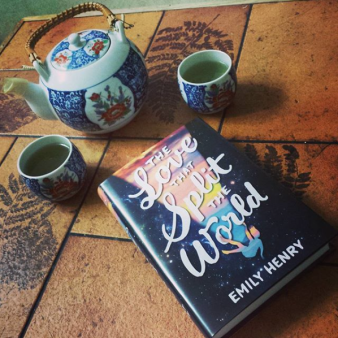


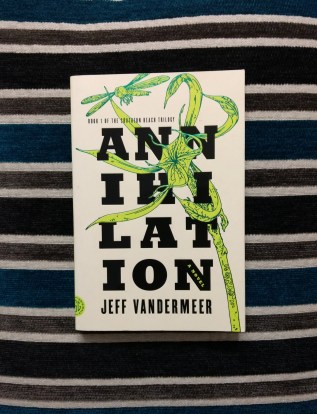
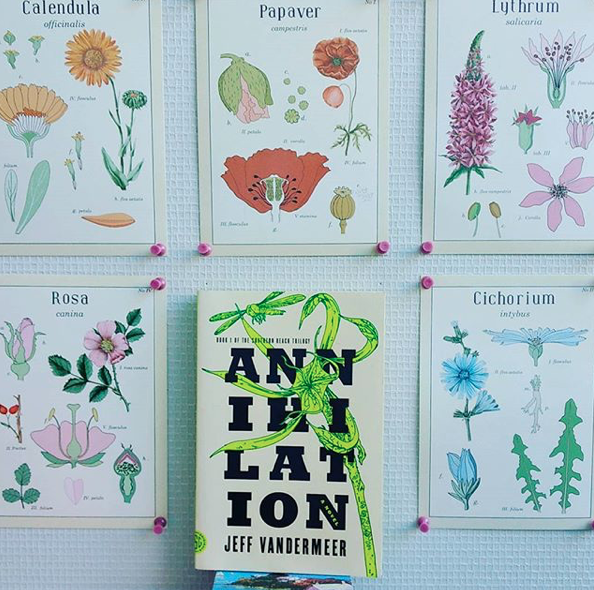 Annihilation by Jeff Vandermeer

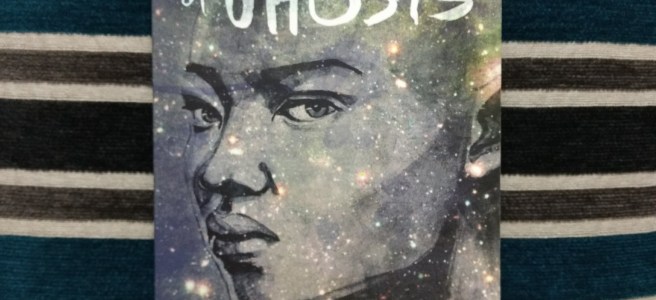
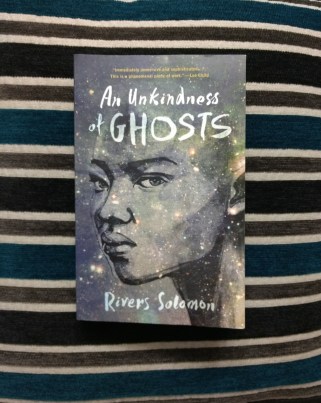
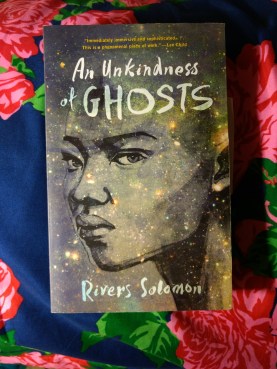 First I read An Unkindness of Ghosts by Rivers Solomon. This book is a science fiction novel that I acquired through the Page Habit subscription box for the month of October of last year. Solomon takes us on a trip on the HSS Matilda, a spaceship that has been traveling towards the Promised Land. People have left their world to go on this ship because their planet was dying. Now, they are separated by class and gender and are trying to survive the trip to this Promised Land when things start to go wrong. You can read a full review
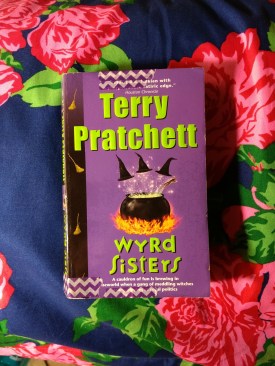 Finally I read Wyrd Sisters by Terry Pratchett, another installment of the Discworld series. This was such a great book! It’s a take on Macbeth from the point of view of the witches, and it references quite a few other Shakespeare plays. This one is a tad more bloody than others, as well as more cheeky at times. The characters we follow are Granny Weatherwax, Nanny Ogg, and Magrat. Pratchett manages a very clever novel full of interesting characters, from a violent cat to Death itself, and Hwel, a dwarf with all the inspiration to write plays like no one has seen before. Simply fantastic.


 2017 — Homegoing by Yaa Gyasi


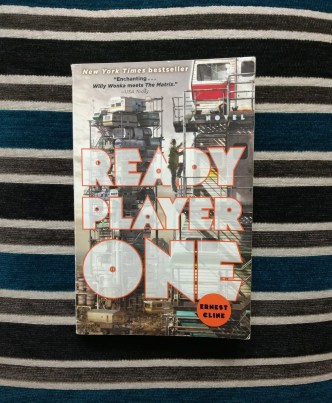 The final book I’ll be reading this month is actually a re-read! I loved this book when I read it a few years ago and I’m looking forward to reading it again. I’ll be reading and watching Ready Player One by Ernest Cline as part of the Book vs Movie series. This book has been making the rounds for a while and it’s a favorite for many since it’s full of 80s pop culture, video games, virtual reality, and really unique characters. What I fear is that the movie has not taken care of these characters and has pursued a plot full of the usual characters and expected storyline. I really hope I’m wrong, but the trailers haven’t given me much to hope for… You can see for yourself
 Bites of Books